Match-3 in Disguise
Project Makeover: The Bad-Outfit Rage-Bait Behind a Match-3
Project Makeover's ads show rescuing women from disastrous outfits — pin-pulling, rage-bait choices, wrong-dress shame. The real game is a makeover match-3.
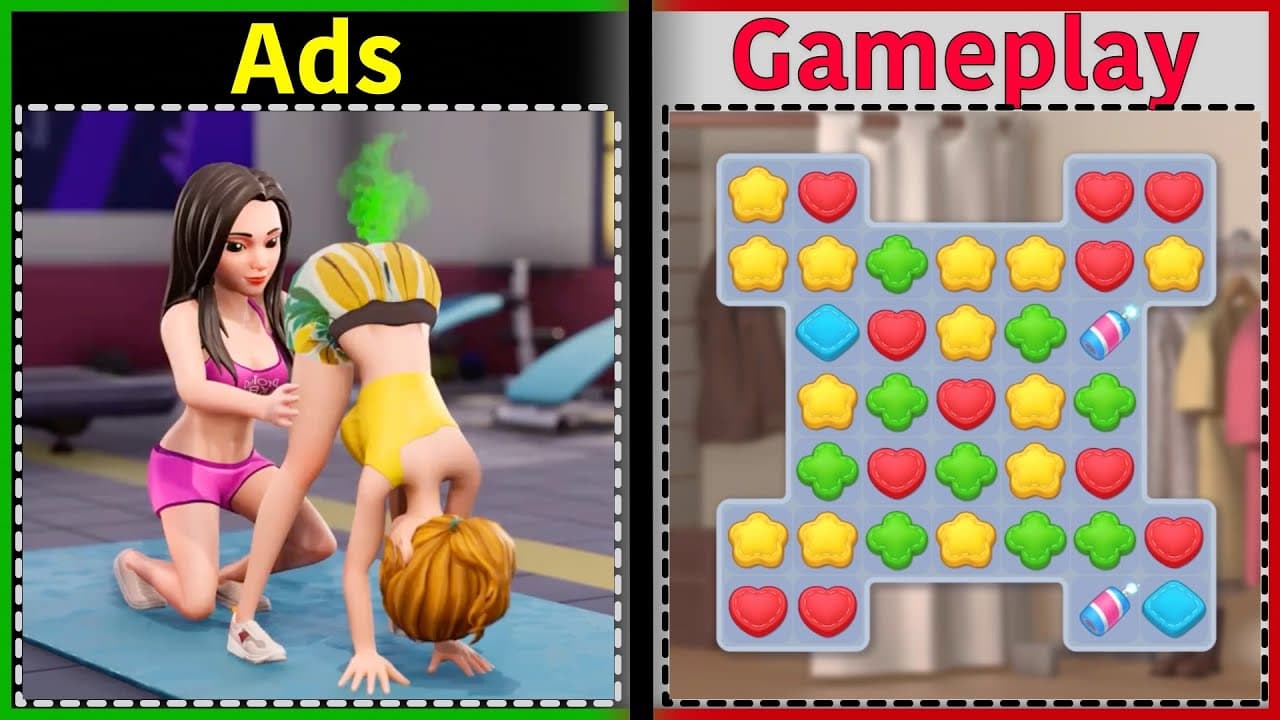
The ad
A woman stands in front of a mirror in a stained tracksuit, holding a half-eaten burrito. The "player" is asked to choose between three outfits: a wedding dress, a clown costume, and a hazmat suit. The fictional player picks the clown costume. The woman cries. Text reads "Only 3% can do this!"
Other ad variants involve pulling pins to release water onto a greasy-haired client, swiping to apply makeup that goes catastrophically wrong, or arranging hair so it doesn't end up looking like a bird's nest. Every ad ends with the on-screen player making the obviously wrong choice, baiting the viewer to download and "do it properly."
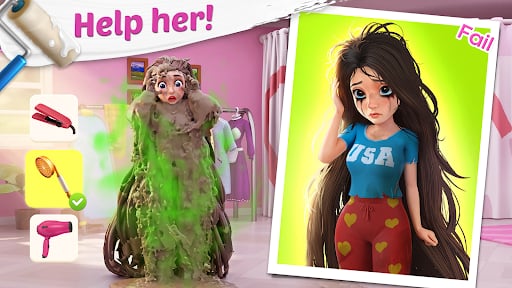

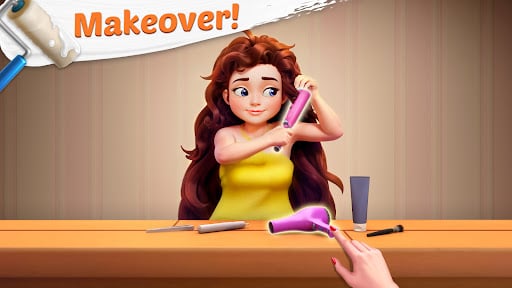
What the real game is
Project Makeover is a match-3 puzzle game. Swap colored tiles. Clear objectives. Earn coins. Use those coins to advance the makeover storyline — pick a haircut from a small preset list, pick an outfit from a small preset list, redecorate the client's apartment.
The "decisions" you make in the actual makeover scenes are extremely constrained. You choose between 2–3 pre-vetted options that all look broadly fine. There is no scenario in which you can pick the clown costume. The disastrous-choice gameplay shown in the ads simply does not exist as a mechanic.
The rage-bait formula, perfected
Project Makeover, developed by Magic Tavern (later acquired by Moon Active, the Coin Master studio), is a textbook example of the "intentionally fail" ad — a sub-genre where ads showcase a fictional player making decisions so dumb that viewers download out of sheer frustration to prove they would do better.
The formula has three reliable beats:
- A premise the viewer can immediately judge ("which outfit looks best?")
- A fictional player who picks the worst possible answer
- An on-screen counter implying only the smartest N% can succeed
The IPM (installs per mille) on rage-bait creatives consistently beats honest-gameplay creatives by 3–5x in mobile UA benchmarks. The emotional hook isn't curiosity. It's contempt.
Why match-3 specifically
You may have noticed that nearly every fake-ad campaign in this archive eventually resolves to match-3. There's a structural reason: match-3 has the highest player LTV in casual mobile, the broadest demographic appeal, and the lowest churn. Studios are willing to spend extraordinary CPI on match-3 installs because the backend monetization recovers it.
The fake ad is just the cheapest possible vehicle for delivering a match-3 install. The "makeover" in Project Makeover is the wrapper. The "puzzles" are the wrapper. The actual product is a tile-swap engine optimized for whales.
Our Lie Score: 9/10
The makeover storyline exists. The renovation exists. But the entire mechanic the ads sell — choosing between disastrous and good options, with consequences — is fabricated. You will never pull a pin to release water on a client. You will never accidentally shave someone bald. The advertised gameplay isn't even a stretched version of the real game; it's a fiction.
The asymmetric apology
Magic Tavern, when pressed on the deceptive ads in early 2024 press coverage, defended them as "stylized representations of the makeover fantasy." This is the standard industry boilerplate — the same language King used for Candy Crush, Playrix used for Homescapes, and Dream Games uses for Royal Match.
Translation: the ad is the product. The match-3 underneath is just what users do once they've already paid the install acquisition cost.